
Unlock the Rare Breed Trigger: How This Forced Reset Device Redefines Speed
What if your firearm could deliver a rapid, controlled burst of fire without compromising accuracy or safety? The rare breed trigger achieves this by utilizing a forced-reset mechanism, where the trigger resets forward automatically after each shot while the hammer remains in motion, enabling a firing cycle that outpaces standard semi-automatic operation. This design exploits the bolt’s rearward travel to push the trigger shoe forward, allowing the shooter to maintain a steady pull while the system cycles at an elevated rate. To use it effectively, you simply mount the trigger into a compatible lower receiver, ensuring proper bolt carrier group clearance, then apply a consistent rearward press to initiate the forced-reset firing sequence, which returns the trigger to its ready position without a conventional manual reset.
What Exactly Is a Rare Breed Trigger and How Does It Work?

A rare breed trigger is a forced-reset trigger system that mimics full-auto fire while technically staying in semi-auto mode. The mechanism works through a clever internal geometry: the trigger shoe resets forward under recoil energy, even while the shooter’s finger remains held to the rear. As the bolt carrier group cycles, it strikes a trip lever, physically pushing the trigger back into its forward position—this is the “forced reset.” Once reset, the sear re-engages, and the slight forward pressure from your trigger finger releases it again, firing another round. This cycle repeats for as long as the grip is maintained, producing a high cyclic rate. The key is that the trigger’s own mechanical interaction with the bolt carrier drives the reset, not your muscles. In practice, you experience a continuous, fast firing rhythm, but the trigger never locks into true automatic mode—it simply rides the recoil impulse. Understanding this forced-reset function is essential to controlling the firearm safely, since muzzle rise and shot timing differ dramatically from standard semi-auto shooting.
The Core Mechanics Behind the Patented FRT Design

The patented FRT design centers on a trigger-reset geometry that outpaces the shooter’s finger, using a sear-and-trip lever arrangement that releases the hammer immediately after bolt return. This eliminates the need for a full manual reset cycle, as the trigger’s internal cam re-engages the sear under spring tension, not shooter input. The process works sequentially:
- the hammer strikes,
- bolt carrier recoil pushes the trip lever,
- the lever rotates the trigger forward into a pre-cocked position,
- the sear drops again on the return stroke.
Thus, the shooter only controls when the firing cycle stops, not when it starts. The patented part is the lever’s angular relationship to the bolt carrier’s speed, which prevents hammer-follow or slam-fire while keeping the pull weight consistent.
Why It’s Called “Rare Breed” – What Makes It Different From Standard Triggers
The “Rare Breed” label stems from its forced-reset trigger mechanism, a design that sets it apart from standard triggers by mechanically returning the trigger forward after each shot without relying on the shooter’s finger. A standard trigger requires a full manual release and re-press, limiting cyclic rate to your physical timing. The Rare Breed’s internal linkage uses bolt movement to reset the sear, enabling a consistent, rapid firing rhythm that mimics full-auto behavior while remaining legally semi-automatic. Unlike binary triggers, which fire on pull and release, this system fires only on the pull, yet achieves higher controllable speed. The difference is tangible: standard triggers feel discrete, step-by-step, while the Rare Breed delivers a fluid, sustained cadence once you maintain steady pressure.
What makes the Rare Breed different is its forced-reset mechanism, which eliminates finger-timed trigger releases, producing a faster, more uniform firing cycle than any standard trigger.
Understanding the Reset Cycle for First-Time Users
For first-time users, the rare breed trigger’s reset cycle demands a deliberate shift from conventional trigger discipline. Unlike a standard trigger, the reset point occurs almost immediately after the hammer drops, requiring you to maintain constant rearward pressure rather than fully releasing the finger. You must learn to feel the subtle, tactile click of the sear re-engaging—this is your only cue to prepare for the next shot. Mastering the rare breed trigger rare breed triggers in stock reset timing means your trigger finger never travels forward; instead, you micro-relax pressure just enough to let the mechanism reset, then press again. This minimizes split times but requires focused practice to avoid “short-stroking,” where the trigger doesn’t fully reset, causing a dead trigger. Dry-fire repetition is essential to build muscle memory for this minimal-motion cycle.
- Keep constant rearward pressure—do not fully release the finger between shots.
- Listen and feel mp5 frt trigger for the sear’s reset click; it is faint but distinct.
- Practice slow, deliberate dry-fires to train the micro-relaxation motion.
- If the trigger goes dead, you’ve short-stroked—push forward slightly and re-engage.
Key Features of the Rare Breed Trigger You Should Know Before Buying
The Rare Breed trigger’s defining feature is its forced-reset mechanism, which allows the bolt to return and reset the trigger without your finger physically releasing it—producing a fast, consistent firing cycle. Before buying, verify the trigger’s **sear geometry** and flat-faced shoe, as these directly affect reset feel and safety. You’ll also want to check the trigger’s compatibility with your specific lower receiver, since drop-in fitment can vary. The spring weight is another key factor: lighter springs reduce pull but may cause slam-fires in some builds. *Q: Does it require a special bolt?* A: No, but a heavier buffer and quality ammo are strongly recommended to ensure reliable forced reset and avoid short-stroking. Finally, confirm the included anti-walk pins, which prevent trigger movement during rapid fire.
Drop-In Installation vs. Gunsmith Fitting – What’s Required?
The Rare Breed trigger is engineered as a true drop-in installation unit, requiring no trigger guard modification, no pin-fitting, and no sear engagement adjustments. In most AR-15 lower receivers, you simply remove the factory hammer and trigger, insert the Rare Breed cassette, and secure the two included pins. However, tolerance stacking wot trigger in mil-spec lowers can occasionally cause the safety selector to bind, so verifying clearance before final assembly is the only practical check you must perform. Gunsmith fitting is almost never required, because the self-contained design eliminates the need for stoning, polishing, or tuning sear surfaces. The only scenario where a smith becomes necessary is if your lower receiver has oversized pin holes or a poorly machined trigger pocket—both rare. For the overwhelming majority, this is a ten-minute armorer-level task, not a professional service.
Drop-in installation means the Rare Breed trigger mounts directly into a standard lower with no modifications; gunsmith fitting is only needed for out-of-spec receivers, making the average buyer fully self-sufficient.
Material Quality and Durability Under High-Round Counts
The Rare Breed trigger’s longevity under high-round counts hinges on its hardened tool steel components, specifically the sear and disconnector surfaces, which resist peening and galling far better than standard MIM parts. The nickel-Teflon coating reduces friction wear on the trigger bar, preserving reset consistency even past 5,000 rounds. The spring set, however, is the first to fatigue; replacing the trigger return spring every 3,000–4,000 rounds avoids light primer strikes from bolt bounce. The housing remains rigid due to its billet aluminum construction, but screws should be re-torqued after initial break-in to prevent walking.
Compatibility With Popular AR-15 Platforms and Lower Receivers
When you’re checking compatibility with popular AR-15 platforms and lower receivers, the Rare Breed trigger drops into most mil-spec lowers without modification—think Anderson, Aero Precision, or PSA. The trigger’s geometry matches standard pin holes and trigger pocket dimensions, so you won’t need extra spacers or bushings. However, billet lowers with tighter tolerances, like some Seekins or Radian models, might require a slight fit check on the selector or trigger pin alignment. Polymer lowers are hit-or-miss; the trigger’s heavier hammer spring can stress thin receiver walls. Stick with forged or quality billet aluminum for a hassle-free install. If your lower has an oversized trigger pocket, the shoe travel feels slightly different, but function stays reliable.
How to Use the Rare Breed Trigger Safely and Effectively
When you first shoulder a rifle fitted with a rare breed trigger, the reset feels like a live wire—snappy, almost eager. To use it safely, keep your trigger finger indexed along the receiver until your sights settle, because the forced-reset mechanism fires the moment the bolt closes and the sear re-engages. Practice slow, deliberate pulls from a supported bench: press straight back, hold through the break, and let the trigger reset itself without ever releasing your grip. On a firing line, that rapid double-tap rhythm can surprise you, so always count rounds—the cyclic speed empties a magazine in seconds. For effective control, shoot in short bursts, not sustained dumps, and keep your support hand firm to manage muzzle rise. The safe and effective use of a rare breed trigger demands your full attention; treat every shot as intentional, never playful, and your accuracy—and your shoulder—will thank you.
Step-by-Step Guide to Achieving Rapid Fire Without Bump Stocks
To achieve rapid fire without a bump stock, begin by ensuring your rare breed trigger is installed with the carrier glide properly seated. Next, maintain a firm, consistent grip on the pistol grip, keeping your support hand forward. Apply steady forward pressure on the receiver while pulling the trigger straight back, allowing the trigger’s forced-reset system to cycle. Keep your shoulder tight and your body braced to control muzzle rise, then practice short, controlled bursts to build muscle memory. Focus on smooth trigger-finger discipline, releasing and resetting in rhythm with the recoil impulse. Finally, dry-fire drills refine your timing before live ammunition use.
Mastering rapid fire requires proper installation, firm grip, forward pressure, and disciplined trigger timing to exploit the forced-reset mechanism safely.
Proper Finger Placement and Grip Technique for Consistent Resets
For consistent resets with the rare breed trigger, anchor your grip high on the backstrap, ensuring the web of your hand sits firmly above the grip tang https://rarebreedtriggertx.com/ to minimize wrist rotation during the firing cycle. Place the pad of your index finger—not the joint—on the trigger’s center, maintaining a neutral sideways pressure that prevents drag against the receiver. Your remaining fingers should wrap with equal tension, avoiding a death grip that induces tremors. After each shot, allow the trigger to travel fully forward by relaxing only the index finger’s extension, while the rest of your hand stays locked. This isolated movement, paired with a steady support-hand pressure, yields predictable reset timing for rapid follow-ups.
High grip, finger-pad placement, and isolated finger release—while locking the rest of the hand—ensure the rare breed trigger resets consistently without disturbing your sight picture.

Common Mistakes New Users Make and How to Avoid Them
New users often **misjudge trigger discipline**, yanking the rare breed trigger instead of using a steady, deliberate press—this causes slam-fires and unintended doubles. Avoid this by practicing dry-fire draws in a locked-safe condition until your finger maintains constant pad contact. Another common error is riding the trigger after reset, which disrupts the forced-reset cycle; release fully each time. Additionally, failing to secure a firm, high grip allows the trigger’s aggressive bounce to walk the firearm off target. Most misfires stem from inconsistent finger placement, not the mechanism itself.
Q: What is the fastest way new users avoid out-of-battery detonations? A: Always verify the bolt is fully forward before applying any trigger pressure, and never “slap” the trigger—use a measured pull with a rigid support hand. Finally, clean the trigger group after every 500 rounds; carbon buildup alters reset timing, tempting users to short-stroke it.
Benefits of Upgrading to This Trigger System for Your Rifle
Upgrading to a rare breed trigger transforms your rifle’s firing cycle into a binary-like experience that rewards controlled, rapid follow-through without the need for aftermarket bolt carriers or heavy buffers. The primary benefit is **speed with stability**—your trigger resets so quickly that you maintain a consistent sight picture while hammering rounds downrange, which is critical for timed drills or defensive rehearsals. This system eliminates the mush and over-travel found in factory triggers, giving you a crisp, tactile break that enhances shot-to-shot accuracy under stress.
The true value is in the reset: you learn to ride it, and your split times drop dramatically while your muzzle control stays flat.
You also gain durability advantage, as the internal components are machined from hardened steel, reducing wear and preventing trigger slap during rapid fire. For any shooter who wants an edge in speed without sacrificing control, this upgrade is a direct, practical performance leap.

Improved Shooting Speed While Retaining Semi-Automatic Control
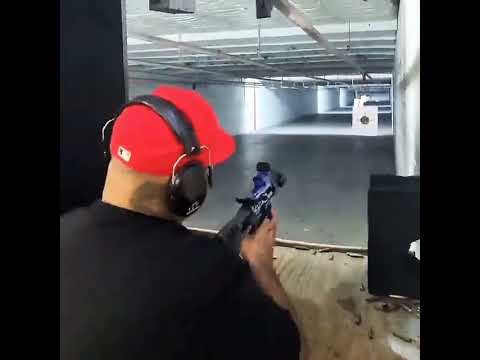
The improved shooting speed while retaining semi-automatic control stems from the trigger’s forced-reset mechanism, which re-engages the sear without requiring the shooter to fully release the finger. This reduces the physical reset distance to near-zero, enabling faster follow-up shots while each round still requires a distinct, deliberate pull. The shooter maintains legal semi-automatic operation because the trigger does not automatically fire; it merely resets the trigger face ps90 frt trigger forward under spring pressure. To exploit this speed, you must keep your trigger finger relaxed and allow the mechanism to push it forward, then apply consistent rearward pressure for each shot. This sequence—1) fire, 2) let the trigger push your finger forward, 3) press again—creates a rapid but controlled cadence, minimizing trigger slap and maintaining accuracy across multiple shots without losing mastery over each individual discharge.
Enhanced Trigger Feel – Comparing Pull Weight and Creep to Factory Triggers
Compared to factory triggers, which often stack a gritty, unpredictable creep before a heavy break, the Rare Breed trigger delivers a distinctly cleaner feel. Factory units commonly pull between six and eight pounds with noticeable take-up, whereas this system offers a crisper, more consistent pull weight that resets quickly. That reduced creep gives you a sharper wall, letting you stage the shot precisely without over-travel fighting your finger. The result is a measurable improvement in trigger control, allowing faster, more accurate follow-ups. You feel the break point sooner, and the reset is tactile enough to stay in rhythm. For precision shooting, that difference—less mush, more definition—makes every squeeze feel deliberate, not like a guessing game.
Enhanced trigger feel here means less creep and a more consistent pull weight than factory triggers, translating directly to tighter groups and faster, more confident shooting.
Training Value – Building Muscle Memory for Faster Follow-Up Shots
The primary training advantage of this system lies in its ability to reinforce consistent trigger index for rapid reset, which directly shortens your follow-up shot timing. Because the trigger’s reset is both short and tactile, your finger learns to release only the minimal distance required, building muscle memory for a smooth, uninterrupted press. This repetition trains your grip and stance to remain stable, as you no longer anticipate a long, heavy pull. Over time, your subconscious pattern becomes faster and more uniform, allowing you to place successive rounds on target without re-aiming or adjusting your hand position. The result is a reliable, repeatable motion that translates directly to practical speed in live-fire drills.
What Users Ask Most About This Trigger System – Practical Answers
Users most often ask whether a rare breed trigger can be safely dry-fired; the practical answer is yes, but only with a snap cap to protect the sear surfaces. They also ask about reset length—typically, the reset is short and tactile, requiring deliberate release to the audible click, not a full finger lift. The most common question is whether the trigger works in standard AR-15 lowers; it does, but it demands a precisely machined receiver pocket, as sloppy tolerances cause hammer follow. Users frequently inquire about spring weight adjustments—they can swap the included springs, but doing so below the factory minimum risks light primer strikes. Finally, they ask about break-in: while the trigger improves slightly after 200–500 rounds, the initial crispness is largely unchanged, so don’t expect a dramatic transformation. For installation, verify the hammer pin is staked to prevent walk-out. For maintenance, lubricate only the sear contact points sparingly, as excess oil attracts carbon and can slow the reset cycle.
Will It Work With Ammunition You Already Have?
Yes, the Rare Breed trigger works with standard, off-the-shelf ammunition you already own, provided it meets a basic threshold. It’s designed to function with common 5.56 NATO and .223 Remington loads, including M193 and M855, as long as they produce enough gas to cycle the bolt reliably. The trigger’s forced-reset mechanism doesn’t care about bullet weight—it responds to the bolt’s rearward movement, not the cartridge itself. Your existing ammo will work fine unless it’s severely underpowered or subsonic. Light-recoil or reduced-velocity rounds can short-stroke the action, causing a reset failure. Stick to standard pressures, and you’re golden. Will it work with ammunition you already have? Yes, as long as it’s full-power rifle ammo—no exotic or weak loads needed.
How to Troubleshoot Misfires or Incomplete Resets at the Range
When a Rare Breed trigger misfires or fails to reset fully, first isolate the ammunition—light primer strikes often stem from hard primers, so test a box of quality brass-cased rounds. Next, inspect the hammer spring tension; if the trigger was disassembled, a reversed or weakened spring causes incomplete resets. Clean the trigger pocket and sear surfaces with CLP, as carbon fouling impedes the carrier’s forward travel. Verify the bolt carrier group’s buffer weight—too heavy a buffer slows cyclic speed, preventing the trigger from catching the hammer. For persistent resets, check the trigger’s cam pin alignment; a worn cam pin will slip, not rotate. Finally, re-grease the sliding surfaces, not oil, which burns off quickly. Systematic diagnosis of hammer spring and cam pin resolves most issues.
- Replace buffer weight if cyclic rate drops below needed threshold.
- Torque the trigger’s set screws per manual—loose screws cause erratic resets.
- Test with a known-good lower to rule out receiver tolerance problems.
Does It Require Special Maintenance or Lubrication Over Time?
No, the Rare Breed trigger doesn’t demand anything frt 15 trigger exotic, but it does appreciate a consistent, light touch. Regular cleaning of the sear surfaces is the main thing—carbon fouling builds up fast during rapid fire, and that grit can slow the reset. Use a dry lube or a very thin coat of standard gun oil on the contact points; avoid heavy grease, which attracts powder residue. Most owners find that a quick wipe-down every 500–700 rounds keeps the trigger crisp. For the reset spring, a drop of CLP on the pivot pin twice a year is plenty. Don’t over-oil, or the action will feel sluggish.
Q: Does it need special lubrication that other triggers don’t?
A: Not really—just avoid thick pastes and keep the trigger pack dry-ish. A light synthetic oil, applied sparingly, is all it needs to stay reliable.
 Facebook.com
 Instagram.com